API data import
When creation a new site, monthly data can be automatically imported from Meteonorm or supported APIs. This triggers the generation of both a .SIT file with monthly values and the generation of a weather data file (.MET) with hourly or sub-hourly values.
The data sources are updated across PVsyst versions. The latest available sources are
- Meteonorm 9.0 (hourly and minute data),
- NASA-SSE 111km grid procedure,
- PVGIS TMY API,
- NSRDB TMY API,
- Solcast TMY API,
- SolarAnywhere® TGY API
- Sorlargis TMY
Meteonorm
Meteonorm algorithms are integrated into PVsyst. Importing Meteonorm data will trigger the generation of an hourly or 1-minute synthetic data file (.MET) and the corresponding monthly values are stored in the .SIT file.
The data included in Meteonorm is described here and the generation algoritm is described here
Versions
The version of Meteonorm available for automatic import has changed across versions of PVsyst:
| PVsyst version | Meteonorm version |
|---|---|
| 8.1 | 9.0 |
| 8.0 | 8.2 |
| 7.3 and 7.4 | 8.1 |
| 7.2 | 8.0 |
| 7.0 and 7.1 | 7.3 |
| 6.76 - 7.0 | 7.2 |
API providers
PVsyst can also import data from several other weather data providers directly from their APIs. Here the data retrieved is and hourly TMY. When dat is imported, a TMY .MET file is be generated and its monthly averages with be saved as the site monthly values. You will be prompted to save the .MET file at the end of the site creation procedure.
In PVsyst 8.1.0 the available APIs are:
- PVGIS TMY API (free)
- NSRDB TMY API (free)
- Solcast TMY API (paid)
- SolarAnywhere® TGY (paid)
- Sorlargis TMY (paid)
All of them require an internet connection and some providers require a paid subscription.
PVGIS TMY data
The PVGIS data available are TMY (Typical Meteorological Year) based on the most recent data reevaluation from the European Commission Joint Research Centre (JRC).
The source of data depends of the geographical site you are creating below are the area covered by each source:
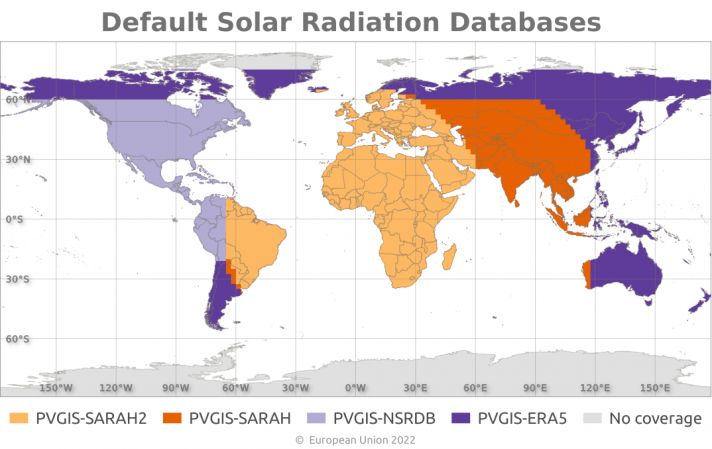
By default the TMY construction is based on the widest possible range of years available in the source database.
Currently, PVGIS versions 5.3 and 5.2 are available in PVsyst. PVGIS version 5.1 is now deprecated.
NSRDB TMY data
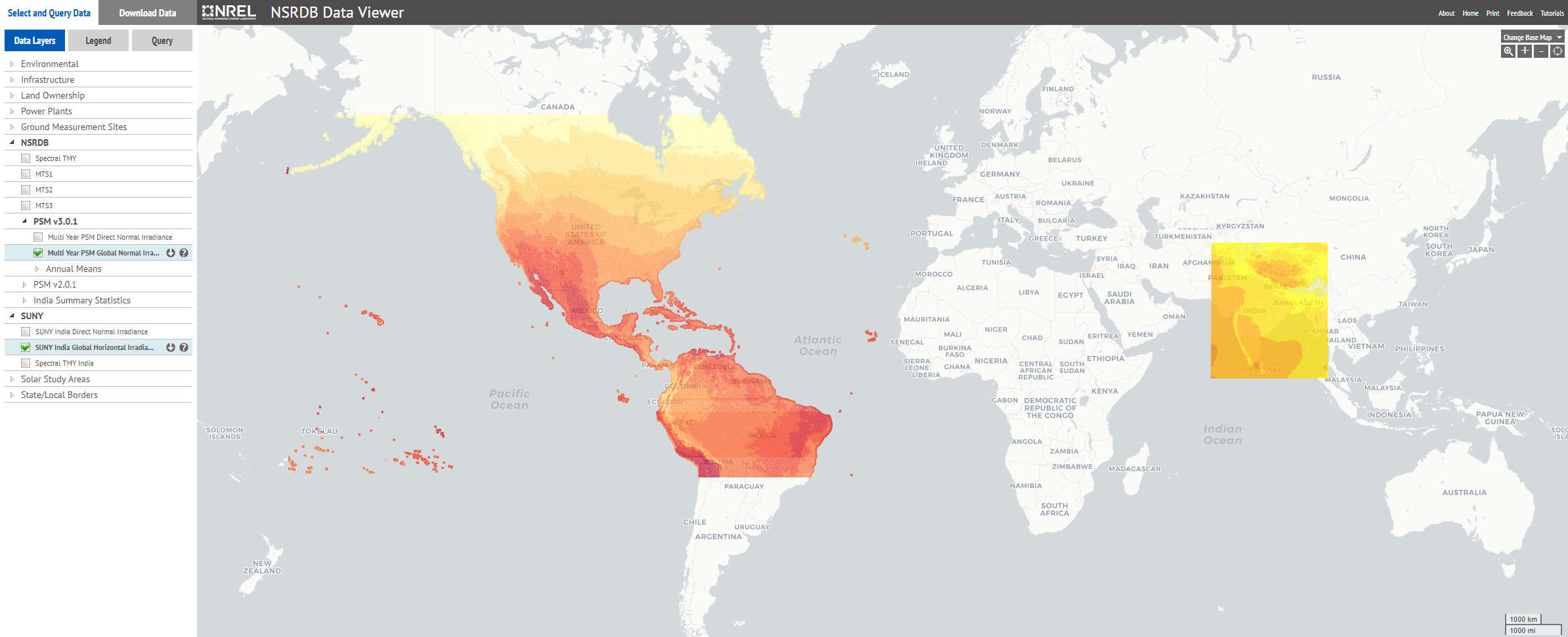
The NSRDB data available are TMY (Typical Meteorological Year) based on the most recent data from the NREL.
Solcast TMY data
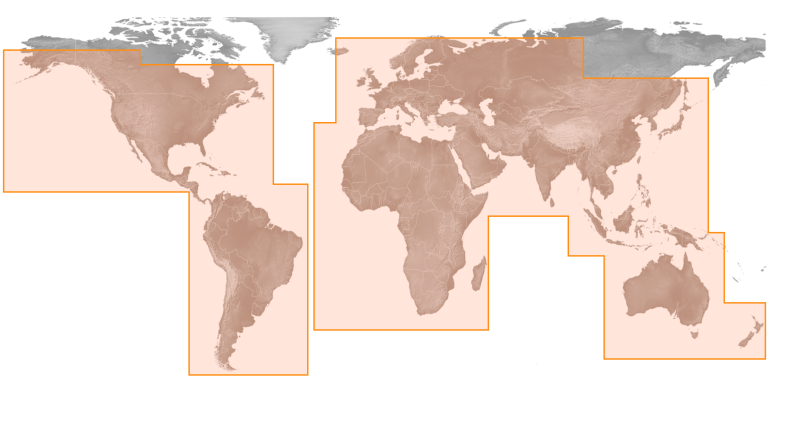
Solcast TMY P50 data is a collation of historical weather data for a specified location for a one year period.
SolarAnywhere® TGY data
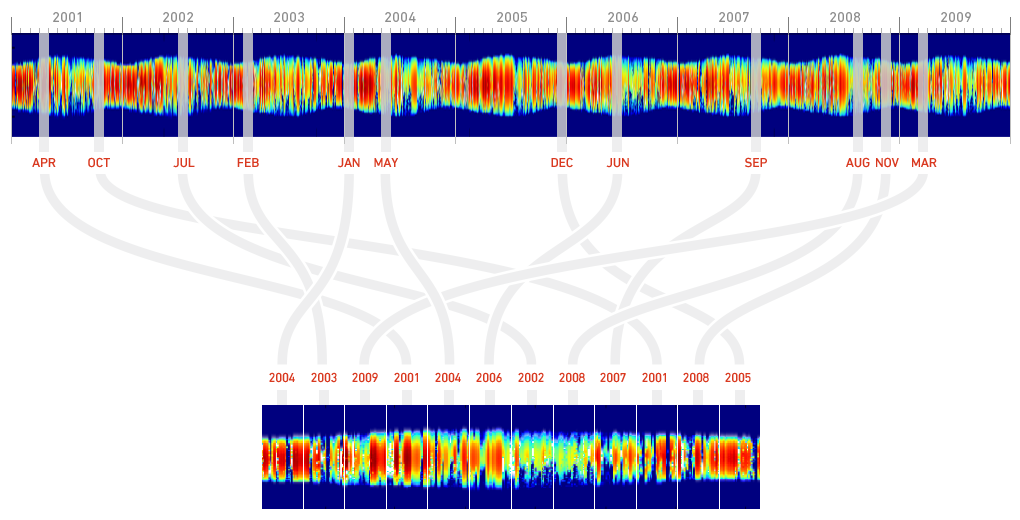
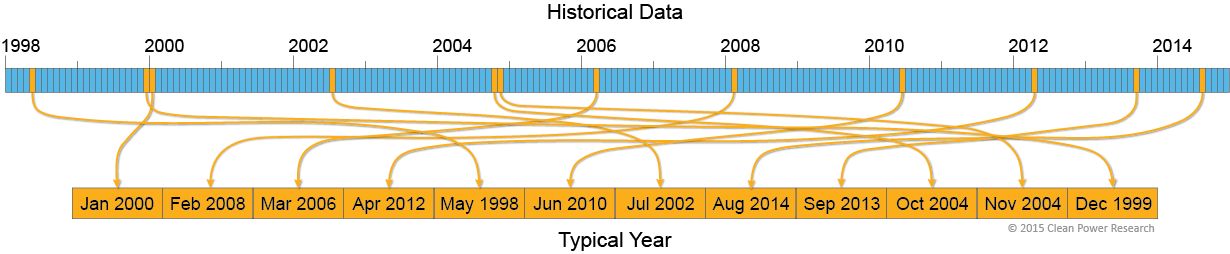
SolarAnywhere® TGY data are SolarAnywhere’s version of TMY data. The TGY data will include 12 months of actual data from various years in the historical time series. For example, if January of 2010 has the monthly total irradiance closest to the long-term average monthly total irradiance for all Januarys as calculated in step 1, it will be included in the file. This is illustrated below.
Solargis TMY data
Solargis provides Typical Meteorological Year (TMY) data for a particular geographical location derived from multi-year time-series as shown below.